Receiving & Processing Critique
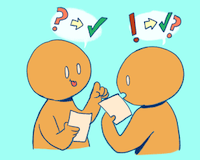
Webcomics have a lot of moving pieces, and constructive critique can be an excellent way to troubleshoot those pieces or get around road blocks. We understand that it can be scary to ask for a critique of your work, but learning how to receive and process critique can help you, and your webcomic, to improve and grow. Today we're going to talk about how to be on the receiving end of critique.
Listen to this episode here:
Listen to this episode on YouTube:
In this Episode:
- What are your experiences with critique, good and bad?
- What do you do to prepare? Are there things you can do before/during/after a critique session to make it more helpful for yourself?
- What is your advice for someone who knows they have intense reactions to being critiqued?
Delphie's 5Ws and 1H
- Who are you getting critique from? Unsolicited strangers and friends who just want to be encouraging both have their own blind spots. Peers who know and enjoy your genre and what you’re trying to do can have more helpful nuanced feedback sometimes, but in a group setting in particular, you’re probably going to have a variety of people. Which isn’t always a bad thing, but you do have to expect to meet people where they’re at in terms of media familiarity.
- What are you looking for feedback on? Vague requests of “is my comic okay” can invite vague answers, so being specific on things you want to work on can help. But also note that comics are a hybrid of lots of elements that work together! People are going to be tasting the whole enchilada, and if the hot sauce is mixed in every part and overpowering the other flavors, they should be able to say so in a healthy feedback environment. Being realistic about what people can/can’t be expected to ignore is important.
- When are you asking for critique? Where are you in the timeline of your development process? No right answer here, but if you’re just asking in the scripting stage or a rough sketch stage, there may be things about the execution that you won’t be getting clear feedback on just yet. If you get a piece of critique on something you did 100 pages ago, are you going to be in a place or mindset to change it?
- Where are you asking? Stick to places where there is a specific agreement that critique can be solicited (Sign up for our critique event or stop by SpiderForest!) or ask first. Quick questions can be answered in busy chats, but a big deep dive may need a slower venue or a pre-arranged agreement on schedule with your critique giver. Cold DMs or emails are also tricky if you’re reaching out to people who don’t know you and who haven’t volunteered themselves to be available for critique. Be respectful of people’s space and their time.
- Why are you asking for critique? Self-examination about your motives is important. Critique to get your motivation back or with the hope of getting people to compliment you can backfire a lot
- How are you going to implement the critique you get? What are your plans for processing curveballs you didn’t expect on an emotional level?
Looking to learn more about how to give a good critique? Check out our Patreon for a bonus episode all about Critique, from the Critiquer's point of view
----
Episode Release Date: April 15, 2026
Episode Credits:
Christina Major (@delphina2k) - she/her, sombulus.com
Rae Baade - they/them, https://empyreancomic.com
Claire Niebergall (Clam) - she/her, https://creativecommons.org/licenses/by-sa/3.
Transcription
This transcript is auto generated by our recording software.
00:00:31.99
Delphina
Hello and welcome to Screen Tones, where we talk anything and everything webcomics. Today we're going to be jamming about critique again, and specifically being on the receiving end of a critique about your own work. I'm Delphina, I use she/her pronouns, and I make the webcomic Sombulus.
00:00:50.87
Rae
And I'm Rae, I use they/them pronouns, and I make the webcomics on Empyrean High and Overlord of Ravenfell.
00:00:59.10
Claire
And I'm Claire, also known as Clam, my pronouns are she, her. I make the webcomic Phantomarine.
00:01:05.60
Delphina
Okay, so webcomics have a lot of moving pieces and critique can be an excellent way to troubleshoot those pieces and get around roadblocks. But asking for critique can also be really scary and receiving it, especially when you're not sure what you're going to get back, can also be a little interesting. So we're just going to talk about it because we want to break that down. We want to make sure that it's accessible to the people who want critique and want to be able to grow in that way and make sure that we have a community and we're contributing to a community that can, you know, give and receive critique in a healthy way. So I'm just going to throw it out. Like, what are your experiences with critique, with getting critique, good and bad? I'll throw it to you, Rae.
00:01:58.36
Rae
Okay, so I used to be in a lot of spaces where it was pretty much expected to critique and often and sometimes that it's expected to critique harshly, both online and offline. So I ended up with pretty thick skin when it comes to that. And I also do want to mention that, yes, there are definitely folks out there in some of those spaces that use critique to bully or put people in their place and feel better about themselves.
00:02:29.05
Rae
So, yeah, like I had a professor once who, his go-to thing was when it was your turn to critique, he would go put your stuff on there and then stab it with a knife to stick it to the wall.
00:02:44.02
Delphina
Are you serious? Like a physical knife.
00:02:46.52
Rae
Yes, a physical knife that he kept in his pocket.
00:02:46.90
Delphina
Oh my God.
00:02:49.97
Claire
That's so extra.
00:02:52.14
Rae
It was. But it set the tone to—he was actually really good at critiquing. But it was definitely a harsh critique because he worked for a graphic design studio.
00:03:05.19
Rae
And, you know, the point of working in graphic design is to meet your client's needs to the best of your ability. So a lot of times he would be like, okay so what were you trying to accomplish? And pretty much focus the critique on reaching to your intention, to or the prompt’s intention, to essentially get to the best and closest to that. So one of the things I do feel
00:03:43.13
Rae
about these spaces for critique is the vibe often ends up influencing the quality of the critique. I've gotten a lot better critique from classes or workshops than casually asking for it in an art forum. And one of the main differences I feel that is the difference between good and bad critique is how actionable it is. Because a lot of people will go, oh, that arm looks weird. It's like, okay, what am I supposed to do with that?
00:04:22.52
Delphina
Yeah, yeah, for sure. I mean, it depends on who's giving the critique. I think, you know, sometimes trying to be friendly or trying to be vague is a way to preserve someone's feelings, I guess.
00:04:38.09
Rae
Mm-hmm.
00:04:38.77
Delphina
But sometimes that's not so helpful. I've definitely lived in those other online spaces too, where it was like, if you go in for critique, you're going to get somebody's CinemaSins breakdown of all of the things that they don't like about what you're doing. And to some extent, yeah, I trained as a graphic designer too. Like, you do sort of want to have some things about. like, some direction to make it the most receivable to the audience that it's intended for, but we have a little more leeway in my personal opinion in the world of webcomics because everybody's got different goals for those and some of them aren't even professional. It's just, you know, trying to make things interesting and fun for them. I’ll throw it to you, Clam.
00:05:34.94
Claire
Yeah, I also have art professor stories. And I'm sitting here thinking about how I had two professors that were very similar. Like you look at them and they both have the same kind of outward vibe. They both...
00:05:50.94
Claire
roughly have—they start critiques from a similar point of view. The one that I would want to focus on is like, a really good example of it was my first year drawing professor in college because here she is taking all of these high school students and basically trying to immediately break down this sense of, oh, you thought you were hot shit in high school? Like, here we go. Like, you're actually going to learn and you're going to start thinking about how you're doing art, how you're breaking things down, but not in a way that's mean, not in a way that's meant to belittle, just in kind of a wake-up call.
00:06:34.01
Claire
And she was very, very good about that. She had a very intimidating presence, but it felt very much like somebody who was ready to kind of sit you down and be like, this is the way it really works. And I will teach you this. It's going to be hard, but we are going to try to get rid of some of your bad habits and make you receptive to the idea of critique. Because when you looked at your first piece of the year and looked at your last piece of the year, it was extremely obvious to see the growth. And I think that's what she wanted us to see.
00:07:10.10
Claire
Every piece along the way had its own challenges, but that skill was being built up to the point where at the end, like kind of that, like a good Miranda Priestly Devil Wears Prada sort of vibe where she's looking at you being kind of like, well done. And that's the highest sort of praise that she could give you.
00:07:31.67
Claire
And another one though, that was very similar, but there was never a sense of that “well done.” There was never a sense of like you worked really hard and yes, you might still have a long way to go, but I'm always better than you. I'm always going to be able to find the problem and not in a therapeutic way, like Rae said, like not in an actionable way, just telling you that it's bad.
00:07:56.44
Claire
And I love the two of them together because very similar sort of levels of intimidation, but one you wanted to impress, the other one you wanted to run away from.
00:08:08.60
Claire
And I've run into similar sorts of characters in the world of webcomics, kind of giving that same sort of level of critique where like, I would want to make my work better because I think they want me to make it better versus somebody who's just like, it's not going to be good. So don't try. I think that's such a huge thing that I hold on to.
00:08:34.23
Delphina
Yeah, absolutely. I feel like that intent is just so key to knowing, okay, do I feel like I can move on from this? And sometimes it is not there. Like, that's the honest truth. Like, if you're getting critique and, like, they're not into what you're doing or, you know, it was never going to be a good fit, like, for whatever they're interested in, like, there's limitations to...
00:09:02.97
Delphina
how helpful that's going to be. And sometimes that like, the best case scenario is that's not helpful and that's not relevant. And the worst case scenario is you take it personally, you internalize it, you're like, well, I'm a failure now or well, I you know, nobody knows what they're talking about. And I never want to receive critique again because it's always going to be like this. And I don't feel like that's ever true. Like to your point, there's all kinds of ways of giving critique and there's different people who will approach it in different ways.
00:09:35.12
Claire
Yeah, I never want anybody to be afraid of it, even if they've had bad experiences. But it is up to people in that sort of position of power to recognize the damage they could be doing, too.
00:09:50.10
Delphina
And I'm a person who I really want to encourage people who are in webcomic communities with other webcomic creators to give critique, to practice giving critique, to focus on trying to make a constructive tone for themselves and really help people. Because I see it too a lot from people who are just like, well, I tell it like it is. And, you know, I'm just saying what's on my mind. I'm honest about it. And like, yeah, but there's room to like, there's room to be honest and also constructive. And I don't know. can't.
00:10:32.84
Rae
There's such a thing as destructive critique.
00:10:35.93
Delphina
Yeah, yeah. And that sucks. It's always a little bit of a risk going in because you're not sure necessarily how people handle things.
00:10:48.09
Delphina
Yeah, I think it's worth asking for critique because I know from my experiences, I've learned so much. I did come from sort of a situation where I thought I was hot stuff and then I got into college, same thing.
00:11:06.62
Delphina
And like, I had to do critiques in my graphic design classes. And they would point out things and it would, you know, everybody would both have to have their work critiqued and like participate in critiquing other students' works.
00:11:24.37
Delphina
And so you got—it was a really good experience to be able to get the practice of giving critique and speaking up and saying things because otherwise you just get shy.
00:11:37.54
Delphina
You're just like, oh, I don't know. I don't know what to say. But at least in graphic design, it was like everybody kind of had a point because if you're trying to appeal to a larger audience, everybody's going to see your artwork in a different way. So even if it wasn't something that you wanted to act on, it was helpful for me to hear people talking about something from a completely different point of view, because maybe I hadn't even considered it would be viewed that way by that particular audience. Maybe I hadn't even like thought that
00:12:14.71
Delphina
it would be an issue or something else because of cultural things, because of any kind of demographic issue. Like, somebody might see it in a different way than I did. So that was really humbling. That was really important for me. And it's something I took with me to webcomics. Yeah. And I try to do my best.
00:12:39.82
Claire
I think that's kind of the best way of having a critique is, it's getting you out of your own head, but in a therapeutic way. It's not necessarily telling you like, you ignored this or you didn't see this, bad. It's more like taking you above the clouds and being like, this is what other people see. And it'll highly depend on what their background is and what their previous experience is. But like at its best, it's somebody being like, hey, did you consider that this looks like this and you're like, oh, I didn't. Okay, I will take that into account. So yeah, just kind of a revelation, a sharing of minds, I think, in a way.
00:13:24.66
Rae
Yeah, I do think it's important because when it comes to comics, that what you're putting out might not necessarily be what other people see because, you know, they're bringing their own experiences to the table.
00:13:43.06
Rae
So it's that space between being the reader and being the author where some really interesting stuff happens. Because, I mean, we've all read romances where it's like going... oh, that main character is creepy.
00:14:01.85
Rae
But the author never considers it because to them, it's romantic. It's like, hmm, that might have been nice to know ahead of time.
00:14:14.23
Rae
So it's good because you can because some other people can make you aware of certain blind spots you might have.
00:14:24.89
Rae
But the most important part about critique is essentially to make your work the best to your ability in your own voice. So bad critique is like, oh, you should do it like how I want it to be. The Disco Elysium should be about a witch in the Alps trying to find a lost cat.
00:14:52.06
Rae
Yeah.
00:14:52.39
Claire
That's right. I remember.
00:14:53.87
Delphina
Oh, God.
00:14:55.19
Claire
Oh, no.
00:14:56.89
Rae
But no, that's not the story that you want to tell. So good critique should take into account the story you want to tell and how best to elevate your voice from what it is now to what it could be rather than turning the main character into a witch.
00:15:20.65
Delphina
But I want to turn the main character into a witch. Isn't that what everybody wants? Everybody wants that.
00:15:27.45
Rae
I don't know.
00:15:29.94
Delphina
Yeah. It's so true. And I just, I wonder, like, what can you do to prepare? Like, are there things that you can do when you're the person requesting critique? Because there is a lot that's on the shoulders of the person giving the critique, especially in an academic setting where we're seeing a professor or a person of authority. But when you're with peers, I think it gets a little fuzzier, right? So like, what do you do? How do you frame your critique? Is there anything that you can do before or during or after a critique session to make it more helpful or more likely to succeed for yourself?
00:16:16.15
Rae
So for me, I do think exposure therapy is pretty important, but you're not going to start with that. So I think that the first thing is, you need to surround yourself with people that are actually invested in seeing you succeed and know what you're trying to do. So you don't have to necessarily start from scratch in explaining your work. Part of the preparations in art school is you write an artist statement to guide your critics on your intentions and where you're coming from. You might not need to go into that level of formality, but I do think it really helps you for yourself and for your critic to at least have enough self-awareness of what you want and the direction you want to go. That also makes it really easy to sift into what is useful in a critique and what isn't.
00:17:24.44
Rae
And during, I think—it does help to set the vibes and expectations on what you want from a critique. A good point is ask questions to clarify what someone means. And this is especially helpful if you find the critique to be kind of destructive rather than constructive.
00:17:54.07
Rae
Because you at least want to get something out of it rather than just break down in what all your art is, but nothing on how to fix it.
00:18:07.90
Rae
So if someone goes, oh, hey, that angle isn't working, maybe ask them what angle might work and if they have examples. And for after a critique session, I will say sometimes I do need to step back from an especially harsh critique, but often I'll go back and reread it later. And you'll be amazed at how often the tone changes for these critiques. Because if you're being emotional, you will put a lot of that emotion into that critique that might not have been in there in the first place, especially in a more formal setting where, you know, people don't use emojis or anything to indicate tone.
00:18:57.02
Rae
So I do think that is important to keep in mind. And it's also important to give yourself the space to have those feelings before you actually are able to read and process what is being said.
00:19:10.71
Delphina
Absolutely. I feel like there's just so much where you're like—especially when you make vaguer requests, you're not really sure. You're just like, what do you think of my comic? Is my comic okay? And it's like, you're going to get all kinds of answers. You're going to get a lot of different things if you're not very specific. But even if you are specific, comics are kind of a hybrid of a lot of different elements that work together. So people are going to be tasting that whole enchilada. And if the hot sauce is mixed in every part and overpowering the other flavors, they should be able to say so in a healthy feedback environment.
00:19:52.50
Delphina
And so I feel like there is like your kind of—yeah, you do want to be specific and you do want to, in an ideal world, or, you know, you might be going in thinking that people will only talk about the things that you want them to talk about, but...
00:20:13.94
Delphina
Sometimes that's not the case. There are things that people can or can't be expected to ignore and you kind of do need to have that space to be like, okay, I acknowledge this, I’m going to step away if it comes back in a way that feels like it's an attack for me, and then I’m going to see what I can do moving forward.
00:20:40.95
Rae
That actually does make me think of some of the critiques I've given where the person that's getting it goes, okay, I don't want to hear about this thing. But it's so in your face and that.
00:20:57.40
Delphina
Yeah.
00:20:58.71
Claire
Yeah.
00:20:58.97
Rae
That it's like, how can we not talk about it? This is what the comic is literally about. And you don't want us to talk about it. So it's like, there is like, that much where you might want to consider, if it keeps getting mentioned, that you might want to examine why you have that thing in there.
00:21:23.77
Rae
Because... if people think that it's not suiting your comic, maybe ask them why and if there's something you can do where it might make it be able to work.
00:21:40.15
Delphina
Yeah, I think that's one of the beauties of the group sort of setting is that you can get a lot of people's different opinions and you can see, okay, how frequently is this being mentioned? Like beyond just like one person saying it, because one person could just say that's their opinion. You don't necessarily have to follow it because it's not their taste or whatever. But like if you're hearing it multiple times,
00:22:04.59
Delphina
then that's an indicator that, okay, there's something that you can do about this. And everybody's going to have a different way of solving that problem. So I feel like that's an ideal situation for a group thing. Or if you hear something individually, you can say, hey, you know, I got a critique from one person. They said, blah, blah, blah. Like, do you think this is an issue or do you agree or not? And like, then you can kind of get some people, like get some targeted feedback about, yeah, okay, I know what I can do about this.
00:22:40.77
Claire
I'll just hop in and say, yep, this is absolutely my experience. The whole idea of kind of hearing the same thing from multiple people and not wanting to implement it because that's not what you came to the critique for. That happened to me. I never asked for a formal critique of my comic, but I had people basically giving mini critiques just unprompted. Their main thing for me was they didn't know what was happening at the beginning, but they figured it out over time. But yeah, the whole thing kind of culminated in me getting an actual mean critique from someone who I asked for a critique.
00:23:25.40
Claire
And they said the same thing, but they said it really, really cruelly. And it kind of scrambled my brain at first. It didn't make me not want to do it, but it made me kind of glance back and look at those previous things that people were saying about it not being clear at the beginning, being like, oh, okay, like this person's critique sucked, but they were saying the same thing. What can I get out of that? What... Is there a nugget that's shared amongst all of these that I can use to actually make it better? And adding a new prologue actually did make it better. It made it way more accessible. Such a—yeah I always think about like people were saying the exact same thing very neutrally, just kind of saying like, yeah, I got into it and I didn't know exactly what was going on. But then one person was like, yep, I didn't know what was going on. It sucked. I didn't read it. And you're like, whoa, there, like, that's the same thing, but said in a totally different way. But recognizing that it's the same amongst all of them made me be like, okay, this is something that I do need to do. And I think...
00:24:34.17
Claire
I think going back to the idea of kind of going into a critique and not expecting what you're going to hear, like very easy to say, like expect the unexpected or expect to be surprised. But like, it actually really does happen a lot where somebody will be like, yeah, like I know that, you know, parts of this are like this, or my anatomy is weird or my writing is bad, but I just want you to critique the grammar or something.
00:25:02.86
Claire
And that's not what the person is going to be looking at. Maybe they can focus on that, but that's, that's like an editor. That's like a copy editor sort of position. That's not somebody who's being asked to read all of your work, take it in like, give their first impressions. People are going to look at your work as a whole. They're going to look at every aspect of it as an experience, as something that is being beamed into their brain and being like, they're being told like, interpret this. And if there is a problem with how
00:25:38.04
Claire
you have made the comic interpretable, then that's something that you do need to hear because that's extremely important. And I know that like when we were doing critiques for Screen Tones last year, like a lot of the things that I ran into was the person would ask for one specific kind of critique or a focus, but then we would be like, actually, the focus needs to be this.
00:26:06.87
Claire
And I think it depended on the person how they would actually look into it and be they would either be like, oh, yeah, I didn't think about that. That's really interesting. Or they would be like, no, I don't want that. I don't want to think about that. And it highly depends, but I don't know. Sometimes it really is, like, it is sometimes the art. It is sometimes, like, the story itself, the writing. And, like, God help you if you're 300 pages in and somebody's telling you, like, yeah, like the thing to fix is a lot of it. And I don't know how you deal with that feeling.
00:26:46.46
Claire
That's really, really hard. And I feel terrible whenever that's the sort of thing that is being given in a critique. But I don't know. I think I think softening it with kind of like, here's the critique that I want to give you, but like attenuated. So it's not like the full blast, but then also being like, would you be open to me telling you kind of a larger issue with this comic? I think there's been a couple instances where I've seen people do that. And it at least...
00:27:22.33
Claire
kind of creates an environment where you know the critiquer doesn't want to hurt you. They want to help, but they know that they're about to drop a boulder on you and they don't know if you can catch it. So yeah, I find that interesting.
00:27:36.79
Rae
Yeah, sometimes it can be really hard not to drop a boulder on these people, especially when you're not sure how they're going to react. And I think a lot of people that like go out of their way and ask for critique know that there's a lot of people that are not prepared to receive it. So yeah, that, that can definitely be interesting. I do definitely think that it is important to meet the artist where they're at, because there's only so much that you can really critique that is within their ability to fix sometimes too. Some of it is just getting more practice in, and,
00:28:23.62
Rae
That's really not something that a lot of people want to hear, especially since it's like, oh, hey you just need to practice more. It's like, well, so does everyone.
00:28:34.26
Claire
Yeah, exactly. Like, tell me what I don't know.
00:28:38.65
Delphina
Yeah, that's like 90% of it. I would say it's just like you're going to keep going and you're going to keep getting better. And I know a lot of people in my spaces when they ask for critique, they're just like, I'm not going to change any of the previous pages. I don't want to go back. I don't want to be stuck in a reboot cycle, which is fair.
00:28:59.16
Delphina
It's so easy to get caught up on hearing somebody make a list of things that they didn't understand. And you're like, you're exactly right. I need to start over. And like that, then you just, you keep doing the same five pages over and over again because you're trying to get the perfect beginning. And that doesn't exist. Sometimes you can figure out a way to do something quickly. Sometimes it's, it's just going to be a, it's moving forward.
00:29:35.58
Delphina
I do think, especially in terms of a beginning of a comic, that's like your hook. That's your intro. And those are critiques that are somewhat worth looking into. Like, okay, is there anything I can do?
00:29:48.95
Delphina
If I hear a critique, if I agree with the critique, if I know it's something that I want to change because this person has a good idea, what sustainable way could I do to work this out. One that I think about a lot is font choices. Is it that hard to go through and change a font if someone says the font is unreadable? I don't think so. I feel like that's a change that I would be happy to make and that I have made in my own pages because it's not really affecting much. As long as I have the layered files, it's fine. Just picking a different font to make it a little more readable would be an easy change for me. But if someone's asking me, you know, I think you need to make this person your focal character instead of that person, like, ooh, that's tough.
00:30:42.58
Delphina
That's a little much. and you're kind of allowed to step away from that and say, okay, well, like let's look into that into the future. Let's see what I can do to bring that character forward into the future if you think that's going to be a more powerful direction for my comic or something like that. But that does bring to mind to me, like when are you asking for the critique? Because when you're just in like the timeline or the development process like you're in the scripting stage or rough draft, I see a lot of people asking people to look at their scripts, to look at their sketches, to look at their thumbnails, and you can give a little bit of critique about that that's and that's kind of nice to have
00:31:31.48
Delphina
before you get started with rendering the page fully. But there might be things about the execution that you won't get clear feedback on just yet. So that's a thing that you might keep in mind too in the other direction. Like if you ask for critique too early, the helpfulness might be a little on the vaguer side, I would say.
00:31:59.00
Claire
I definitely run into that. I see people asking, I think it's best when there are thumbnails with like little pieces of the script beside it. Like that's, that's kind of the limit that I would go for, for something that is ultimately like an unfinished page.
00:32:17.72
Claire
But even then, how many times do we look at somebody's thumbnails and be like, which character is that? Like, that's, that's just a head with a scribble of hair on it.
00:32:27.83
Rae
Sometimes I do that with my own thumbnails.
00:32:30.20
Claire
Yeah.
00:32:31.47
Rae
Other people's is like, hmm, I don't know how to make what to make of this.
00:32:34.23
Claire
Yeah. Exactly. Like I think asking for critique at the script stage is, it's not something that I feel comfortable doing because I know how much the script changes when it becomes visual. I know that. It's an incredible shift. Like even the best opening script can be absolutely dashed by not conveying it perfectly, or like not perfectly, but appropriately with art and with effects and anything else that you need. I would want someone to not get too far ahead. So maybe like critiquing it, like the pencils or ink stage is probably pretty good. If you really, really wanted to not show like the final product, but maybe I think
00:33:28.47
Claire
I think having like my ideal situation would have somebody present to me a whole chapter, like let's say 30 pages. And the first few pages are complete. They're fully colored, rendered, lettered, everything. Then the rest is not. The rest is still legible, but you have kind of the concept of like, this is what it's going to look like. And that's enough information going forward to be like, okay, here's, here's the initial kind of pitch of what you can do.
00:33:59.55
Claire
Here's how I would evaluate the rest of the chapter based on that information. Like you have to give the critiquer a little bit more than just the basic bare bones of what you're doing so that they know kind of what that final product might look like. Cause it is like, it does depend on everything working together in tandem.
00:34:20.44
Delphina
I feel like the ideal situation is I know what you're capable of, like either because I'm familiar with your work other places. So I know like rendering wise what you're going to be doing.
00:34:34.90
Delphina
And then I just need some rough pencils or something like that to be able to see, okay, this is this is the story and this is how you're paneling it out. I think a lot of people who are maybe new to comics are and are writing things in a Word document or whatever are not really always thinking about how it's going to break out and then that affects pacing. So if you're paneling things and you want to have one big splashy panel every single page that's going to slow the story down a lot in a way that might not be—
00:35:18.87
Delphina
that might lose readers eventually because long form webcomics, they're, they're a long game. They're a marathon. People are going to be reading this over the course of several years. So my policy is always to be sure that I can deliver a lot of information in a short amount of time versus things stretching on and on and people getting lost and people not really understanding where things are going and taking hundreds of pages to do things. Gosh, I'm a hypocrite.
00:35:54.36
Claire
We all are.
00:35:51.26
Delphina
So many pages though.
00:35:54.14
Rae
You're not as bad as some things. I feel like a lot of people get animator brain and it takes like two updates to open a door or something so. Yeah, like things like that, we're not going to see in the script where it's like so and so opens the door.
00:36:21.37
Delphina
I feel like there's a lot of things. So just getting those panels and on the page, even in a rough way, will help diagnose any kinds of issues there. Also, like...
00:36:34.68
Delphina
It matters to me like the depth of critique that you want to get because I know we're on a lot of chat programs like Discord or whatever that might have a place where you can get feedback quickly. And so that's a good place to ask for questions like, oh,
00:36:56.12
Delphina
Is the anatomy reading okay, is the direction reading okay, are my word bubbles on this page specifically okay, and you can get feedback there but then a deeper dive might need a slower venue or like a pre-arranged agreement on a schedule with your critique givers.
00:37:15.99
Rae
Yeah, one thing that I've noticed is a lot of people don't get nearly as many bites when it's something that is very broad. People asking just generally, what do you think of my comic? will not get as many bites as, oh what do you think of this scene? Is it effective for what I'm trying to do? And part of that is because the critique doesn't really have a direction on what they're looking for. But also, it's kind of intimidating, especially if your entire comic is like,
00:38:01.78
Rae
thousands of pages or something, but even 30 pages is a lot of time for someone to invest in your comic, especially if they're busy working on their own which is often the case.
00:38:19.45
Delphina
Absolutely. Being respectful of people's space and time. Also, making sure you know the person you're asking for critique. Because I think if you're a popular creator, you might get cold DMs or emails about, like, hey, you're my favorite person.
00:38:39.54
Delphina
Can you look at my work? Can you tell me what to do because you're my hero? And you can't really necessarily reach out to people who don't know you and who haven't volunteered themselves to be available for critique. So that's another thing that I would lump in that same care category of being respectful of somebody's time and, and making sure that you're good about that.
00:39:15.14
Delphina
So, okay. Somebody gave you a critique and you're sitting there and you're listening to it or you're reading it and you're feeling the wave coming on, whatever that emotion is. It's very strong. It's anger or it's fear or it's self-doubt or maybe even it's like fawning, sort of like, oh my gosh you're absolutely right, some sort of anxiety-driven “I need to do everything now,” and you feel like you need to put on the brakes somehow and kind of slow it down. What is your advice to somebody who knows they're having that intense reaction?
00:40:05.69
Rae
Okay, so first off, what you should not do is print out their PFP and put it on the wall and throw darts at it.
00:40:14.78
Delphina
No, you use knives like the professionals.
00:40:16.50
Rae
Like my professor, exactly.
00:40:18.78
Delphina
Yes.
00:40:19.26
Rae
You're supposed to use knives, not darts.
00:40:22.00
Delphina
Don't do that either.
00:40:22.04
Rae
But first off, I do say give yourself room to have those feelings. It is pretty normal, especially if you're not used to it.
00:40:34.78
Rae
But have them in private. Don't scream at your critique person and demand why they gave you such a mean critique.
00:40:46.17
Rae
Please don't do that, especially if you ask for it. But I would say that it isn't, it is healthy to have those feelings so you can get past them.
00:41:00.50
Rae
And just sit on the critique, maybe come back in an hour or two and try rereading it and seeing if you can actually process it after having those feelings. And learn how to sift through the critique and determine what can actually help you and what misses the mark of your goal.
00:41:21.82
Rae
And I do think it is very important to keep in mind that these critiques are not supposed to be mean. They're not supposed to be insulting. They're there to make you better at what you're already doing.
00:41:38.74
Rae
Maybe to have some breathing exercise exercises and then then come back at it. And so you can actually process what is said rather than processing your feelings and have those to be two separate things.
00:42:03.16
Delphina
Yeah. I feel like for me, like I kind of need a person or a DM or something to like vent like, oh my gosh, look at what they just said, blah, blah, blah, blah.
00:42:14.20
Delphina
Just to get that initial feeling out there because otherwise, if I take a walk, I'm just going to be thinking about it the entire walk around the block.
00:42:23.99
Rae
Oh yeah, I’ll use my partner to shit talk a little bit, but often I'll just come back and go, you know what?
00:42:35.42
Rae
They were right. I need to stop being petty, but I'm going to be a little petty right now.
00:42:40.60
Delphina
We could have a little petty as a treat. It's fine.
00:42:43.22
Rae
Exactly.
00:42:44.79
Delphina
But I think it changes the game when you respond to them or like where you respond to that critique where you vent those initial feelings, like is it on social media, is it like to their face, is it something else? And especially if they see it later, like, are they going to feel like they wasted their time, like reading and giving you that critique? Because people don't generally read your comic with the idea,
00:43:20.41
Delphina
“Oh, I just want to tear it down. I just want to tell them how much I hate it.” I feel like people are generally trying to be helpful in the ways that they can. And that's what I always come back to in terms of, okay, maybe I disagree with them a lot, but I know I'm going to trust that they were coming from a good place and they were coming from their experiences and trying to convey those in some way. And I have to appreciate the fact that they put in the time and effort to look into this, especially because I asked. Because otherwise, if you don't put in that appreciation, then people don't want to give other people critique.
00:44:04.47
Delphina
And that just hurts everybody, I think.
00:44:07.38
Rae
Yeah, I actually went through a long dry spell of handing out critiques because I kept getting people asking for it and they were in no way prepared emotionally to actually receive it.
00:44:22.84
Delphina
Yeah, I feel like that's another thing, like self-examination about your own motives is important because a lot of times I see people coming to get feedback. They're asking for critique, but what they actually want is somebody to compliment them. What they actually want is someone to say, you're doing a great job. Like, this is amazing. Or like maybe they're actually fishing for readers too. And that can backfire a lot. Don't come into a critique space with the idea that that's what you're going to get. There are a lot of times when I'm giving somebody critique, I'm like, I have nothing to say because this is actually pretty awesome. And I like this and that and this and the other thing.
00:45:07.74
Delphina
But that's not what you should be expecting. And the intent should be like, make sure that you know that it's very possible and likely that people are going to want to give you actual feedback for improvement.
00:45:27.38
Rae
I've actually also seen it backfire spectacularly when this happens. And their work is actually really awesome. Because when you ask for critique and your work is already like super up there, sure, you might get more readers or people telling you that you're completely awesome, you should do more. But people will also take that opportunity to nitpick. Because you ask for critique. So now they have to go and search for something that they need to critique you about. Because otherwise you're not getting anything from there that they think that you want.
00:46:15.16
Delphina
Oh, gosh, that's so true. I've seen that too. I feel like I was on a forum once where we had a critique the person above you sort of situation going on.
00:46:27.13
Delphina
And it was just like you got to somebody who was like just it like their comic was pretty good and like the person who wanted to jump in, maybe they didn't have quite as much experience or maybe they just didn't like see anything wrong with it so they found like some little detail like the shoe is weird. And it's just like, is that what you're focusing on? Is that what you're doing? And that can just be awkward for everybody. I feel like.
00:47:07.10
Claire
I keep thinking about how my number one piece of advice is try to get the critique in writing so you can process it at your own pace. And it's not always possible, especially like art school or I’m in animation and like you get your critiques in like dailies calls with your supervisor.
00:47:17.11
Delphina
yeah.
00:47:28.98
Claire
So sometimes it can be really, really hard to take a critique in person. I used to be really, really bad at it. I would never lash out or get angry at the person or anything, but I would push back and I would try to excuse things. I also heard from other people that like, even if I'm being quiet, like I'm listening and my eyebrows are reacting to what the person is saying.
00:47:59.80
Delphina
Oh my god.
00:48:00.54
Claire
It was very funny. It was embarrassing, but also very funny to hear that in hindsight, because I'm like, yeah, yeah, my eyebrows are basically the echocardiogram of my brain. It's just like if they go up, it means I think you said something stupid.
00:48:18.26
Rae
Oh my god.
00:48:19.42
Claire
And I felt really bad about that. So like, I actually, over time, I realized like, I have to learn a way to just become so, so externally Zen about that moment.
00:48:34.97
Claire
It's going to hurt either way. Like if somebody is telling you something that you don't agree with and that's going to make your life harder, just, you have to let it flow past you in that, and in that particular moment.
00:48:49.69
Claire
Oftentimes, ‘cause if they're being mean to you, that's one thing, but like if they're actually trying to help you, you don't want them to feel bad about trying to help you. It's tricky. It's tricky. ‘Cause my viewpoint on critique actually changed when I became a supervisor and I had to give a lot of critique to people. And I saw people that were the age that I was having the most trouble at with critique. And I'm like, yeah, I get it. That was how I was before. I didn't want to go back and change this tiny little thing. I didn't want to go back and do a huge redo of something.
00:49:28.60
Claire
But there's just something about it, at least in a professional sense, it is different, but you kind of do enter into this contract with whoever is giving you the critique. Ideally, if they break it, that's on them, but you can still uphold it as strongly as you can. Be respectful, don't turn it into a fight, absorb it,
00:49:57.24
Claire
but then release that bad energy that you absorbed somewhere else. Again, a partner or going for a walk or stabbing the wall, Something. It's really, really hard to do. And I think it takes years of practice, which is why I think getting something written is always better. Because at the very least, you can do the, like, I can walk away and I can tell that this is going to be hard, so I'll look at it later.
00:50:26.20
Claire
You have control over the flow of information, but if you don't, then those are moments where you can basically just be like, I try and have an echo in my head. It's just like, well, that's just your opinion, man.
00:50:39.10
Claire
Like, that's just your opinion. And it's like, yeah, that is their opinion. And they're sharing it. partially to help you, hopefully entirely to help you. So again, like it was said earlier, like every critique will sound a little bit harsher at the very least at first, but then you go away and you scream a little bit and then you think about it and you're like, actually, yeah, that's, that is a good point. Maybe they said it in a bad way, but that's still one person's experience with my work.
00:51:11.96
Claire
And even if you make a movie and it makes a million dollars. Sorry, bad scale now. A billion dollars. But basically, like there's always going to be somebody looking at it being like, that was awful and I hated it. And you're just like, I don't know exactly what you wanted out of it, but that is your experience and that is going to be someone's experience out there. So like I don't know. It's kind of a long-term fortification process, but it is possible. And exposure therapy, I don't know. But a lot of it just is kind of trying to find that inner peace at that moment and realizing It will be okay. It will be okay.
00:51:53.62
Rae
I definitely think that the main benefit to going to art school was being exposed regularly to both giving and taking critique.
00:52:07.90
Rae
And I know that a lot of people that have not been able to go don't have that built-up resistance to taking it. So it's hard to know where people are when they ask for critique.
00:52:26.49
Rae
But exposure definitely does help. Sometimes you can do it in ridiculous ways like, one of the art forums that I used to frequent actually had a thread where this person was just like, “post your art and I'll insult it.”
00:52:46.40
Delphina
Oh my God.
00:52:47.38
Rae
And people would, and it was actually one of the most popular art posting threads at that time. And most people thought it was really funny, but you did get a few people that got super offended that their art was insulted when they posted in the “I'll insult your art” thread.
00:53:10.58
Delphina
Oh, man, that sounds intense. But like, yeah, were they like really long insults or like, you know, just like snippy little, wow, that green? Are you serious?
00:53:19.90
Rae
Well, the funny thing is, this person actually would usually insult your art in a funny way, but also in a constructive way to point out like, oh, hey, this anatomy is kind of weird.
00:53:35.51
Rae
They would go, “This anatomy looks like it went through the blender. You need to do this, this, and this to, you know, make it look the way you want.”
00:53:47.10
Rae
So it was actually kind of... bad and good at the same time.
00:53:53.30
Claire
But I think that's the best case scenario. If somebody sets clear kind of expectations on what the tone is going to be, so you're not surprised by anything going in, but then they also know what they're talking about.
00:54:06.36
Claire
And especially in a case like that, it's not like, I'll insult it to make myself feel better. It's like, I'll insult it to show you immediately what you need to fix. Like, I think that's something a lot of people want. And I think that's something a lot of people want when they ask for critique, because they are thinking about it more as specific things that they can address to make their future work stronger. Whether it is like you don't you draw this particular kind of anatomy weirdly, or like this perspective is odd, keep an eye on that. Like that's, I think that kind of thread,
00:54:43.54
Claire
that makes everybody more comfortable with the idea of improving because you go in there, you're like, all right, hit me. And then somebody hits you and you're like, cool, now I know how to dodge that sort of, I guess.
00:54:57.59
Delphina
I'm amazed at this. That sounds like an amazing thread. What I kind of like about it is that you can participate. You can see what's going on with other people. So you can see this person say, I'll insult your thread. And somebody else completely unrelated says, OK, here's my art. Insult me. And you laugh along because they made it funny. And now you're like, okay, we can have fun with this. And some of it is like, yes, you're going to be the butt of the joke if you jump in. But that was that was your—you instigated it and you have a little more control over the parameters of when it's going to happen. So as an exposure therapy thing, maybe that's okay. But
00:55:45.76
Delphina
I feel like I would still want to take some time away. And so how dare they, I can feel myself saying, how dare they insult that about my thing?
00:55:58.33
Rae
Yeah, it was really funny. It does sting a little bit, but it's like it's hard to, you know, feel bad about a cream pie being smashed in your face when everyone else is covered in cream.
00:56:12.60
Claire
Yeah, and you asked for it, too. like you went and you're like, hit me with the pie, and somebody hit you with the pie, and you're like, ow, how dare you? I look like a fool. But also, this was what I wanted. Thank you
00:56:25.49
Delphina
That was like 90% of the game shows on Nickelodeon in the 90s too. Like hit me with a pie. As humans, I feel like we like hitting people with pies and we like getting hit by pies and on some level, right? But it's different, I guess, when it's your magnum opus or your story that you've been thinking about for years and years so I do feel like that space sounds fun but I also want spaces where people are more respectful.
00:57:01.18
Delphina
For me, I guess, I always try to plan, like, okay if I get a curveball, if somebody goes back and says I need to change something that I don't want to change, what potential plans would I have for doing that? Could I do that in a second story? Could I do that like in an a future chapter? Could I make some like smaller changes along the way at least to show the critiquer that I listened and that I cared about what they said ultimately after the wave of emotion has passed because that's the thing—I’m just very community brained. I want
00:57:47.51
Delphina
communities to thrive. I want healthy critique spaces to exist and continue to thrive. And I don't want anybody to be afraid of getting critique. And I don't want people being afraid of giving critique because they're, you know, we don't—it feels horrible when you give a critique, you give something that you think is honest, but helpful. And the person runs away and says,
00:58:16.12
Delphina
“Well, now I don't want to make comics anymore.” I mean, that sucks. Nobody wanted that. And I feel like just understanding nobody wanted that, it helps me temper my emotions a little bit.
00:58:34.62
Claire
Yeah, I feel like you're so experienced with giving critique in the SpiderForest arena, basically. The whole point of SpiderForest, at least in that degree, is to help people get better. The point of the critique is to help someone get into SpiderForest like in the future, whether they do a resubmission or not. I wish people would realize you want to help. You don't want someone to run away. I don't approach any critique, I don't look at any comic, being like, you should stop making comics. The only time is if it's actively like hurting you or you’re unhappy or something.
00:59:19.64
Claire
But no, I want your comic to be freaking amazing. I want everybody to have exactly what they want in terms of audience and people being engaged and understanding things. Sometimes you just need someone else's opinion to kind of nudge you in that direction. Like my comic would not be what it is now if it had not gotten critique over the years from some of the people in here. I have whole bits of chapters that are different now because of what some of my friends have said. And I'm like, that's actually a really good point. I didn't have that planned.
00:59:53.41
Claire
It's going to be hard to do, but I want to because they've given me something to go off of. And I don't know. I never want anybody to be discouraged.
01:00:05.05
Claire
It's awful when they take it a certain way but then you also end up being like, was I too harsh? And when you think that you weren't. like, what do you do there? It's really really hard.
01:00:15.74
Delphina
Yeah, I think we can get there. I do.
01:00:18.84
Claire
I do too
01:00:18.89
Rae
Yeah.
01:00:21.27
Rae
Yeah, we just need people to realize we want you to succeed. If we didn't want you to succeed, we probably wouldn't be joining the conversation in critiquing you.
01:00:36.76
Claire
Exactly.
01:00:39.13
Delphina
Yeah, absolutely.
01:00:42.97
Delphina
Okay, well, on that note, yeah, absolutely stop by SpiderForest if you want a critique. You can get a critique whether or not you apply. We have a little critique forum in our hub, so you can go there, make an account, and we'll give you a critique if we can. and we also have a critique event with the Cartoonist Co-op coming up in June.
01:01:08.95
Delphina
I want to say. So that'll be another fun opportunity if you're looking for critique to seek that out too. But yeah, other than that, that's a chicken salad Caesar wrap. Thank you so much for listening. I have been your host Delphina and you can check out my work at sombulus.com.
01:01:29.02
Rae
And I'm Rae, and you can check out my work at EmpyreanComic.com or Overlord of Ravenfell on Webtoon.
01:01:38.33
Claire
And I've been Claire Clam. You can check out my comic at phantomarine.com.
01:01:44.09
Rae
So who wants to insult my art?
01:01:47.19
Claire
No, I can't do it. I'm putting my knives away.
01:01:49.43
Delphina
I can.
01:01:52.63
Delphina
I want to stab it with a knife.
01:01:54.42
Claire
No… such violence.